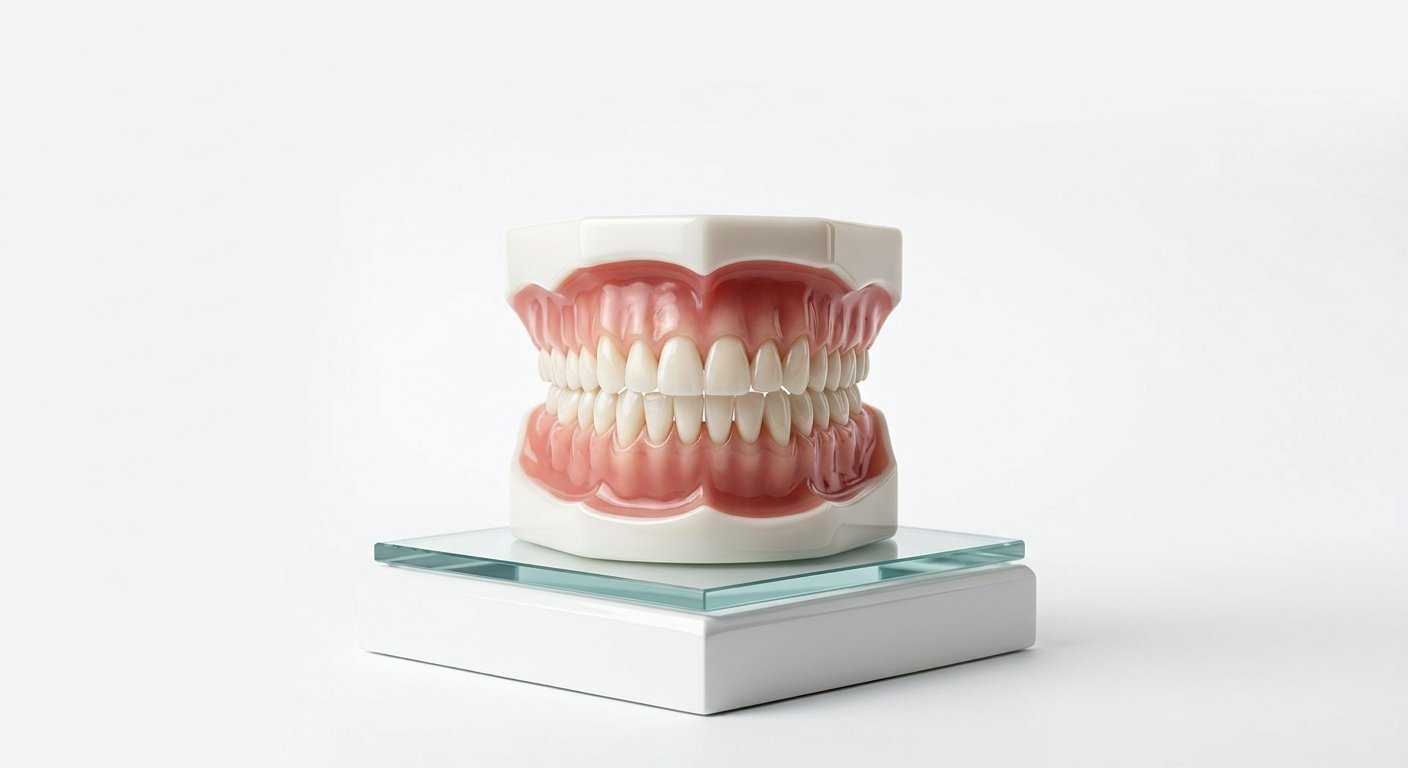
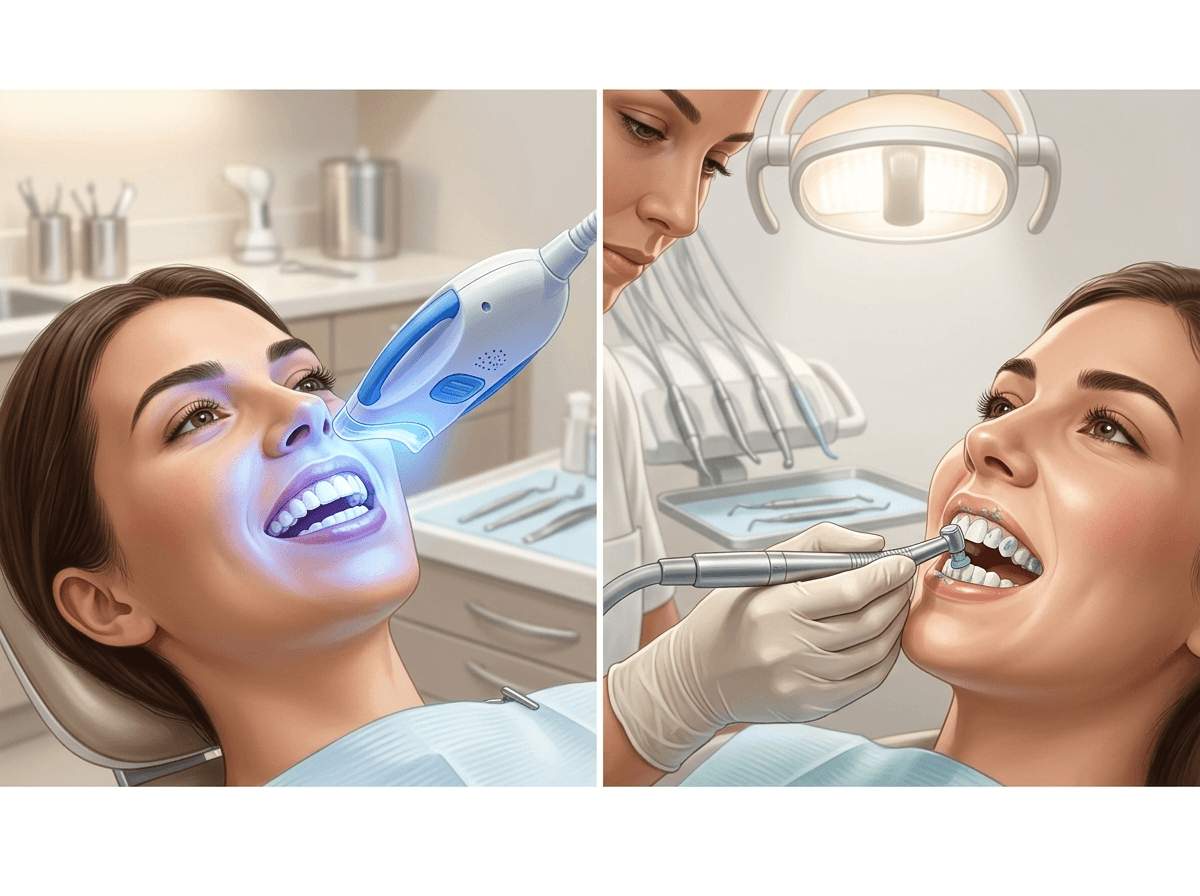
Many patients use the terms teeth whitening and teeth polishing interchangeably, but they are two very different procedures with different goals, methods, and results. Knowing which one you actually need can save you time, money, and unmet expectations.
Teeth polishing is a routine cleaning procedure that removes surface stains and plaque buildup from the outer layer of your teeth. Teeth whitening, on the other hand, uses bleaching agents to lighten the actual colour of your tooth enamel.
If your teeth look dull after a cleaning, polishing may be enough. If they are genuinely discoloured, whitening is the appropriate treatment.
What Is Teeth Polishing?
Teeth polishing is typically performed as part of a routine dental check-up or professional cleaning. A dental hygienist or dentist uses a small rotating rubber cup with a mildly abrasive paste called prophy paste to buff the outer surfaces of the teeth.
The goal is not to change tooth colour permanently. It is to remove surface-level stains caused by tea, coffee, or tobacco, and to smooth out the enamel surface to reduce future plaque adhesion. Most patients notice a slight brightening, but this is a result of stain removal, not structural whitening.
What Polishing Actually Removes
Polishing targets what dentists call extrinsic stains. These are stains that sit on top of or within the outermost layer of enamel rather than being embedded deeper in the tooth structure. Clinical guidance from the British Dental Association notes that polishing is primarily a cosmetic step within a broader prophylaxis (preventive cleaning) session.
Who Should Get Teeth Polished?
Polishing is appropriate for most patients as part of a standard dental visit. It is particularly useful for patients with mild yellowing from dietary habits, those who have recently completed a scaling session and want a refreshed finish, and patients who want low-intervention maintenance between whitening treatments.
What Is Teeth Whitening?
Teeth whitening is a cosmetic dental procedure that uses peroxide-based bleaching agents to penetrate the enamel and break down intrinsic stains. Intrinsic stains are discolourations that exist within the tooth structure itself, often caused by aging, fluorosis, certain medications, or prolonged consumption of staining substances.
The bleaching agent, usually hydrogen peroxide or carbamide peroxide, works by releasing oxygen molecules that react with the coloured compounds inside the enamel.
Types of Teeth Whitening
| Method | How It Works | Setting | Duration of Results |
|---|---|---|---|
| In-office whitening | High-concentration peroxide applied by dentist, often with a light or laser | Dental clinic | 1-3 years with maintenance |
| At-home trays (dentist-prescribed) | Custom-fit trays with lower-concentration gel worn for a set period | At home | 1-2 years |
| Over-the-counter strips/kits | Low-strength peroxide strips available at pharmacies | At home | 6-12 months |
| Internal whitening | Peroxide placed inside a previously root-canal-treated tooth | Dental clinic | Varies |
In-office whitening remains the most effective and safest option because the concentration and application time are controlled by a dental professional. Over-the-counter options carry a higher risk of gum irritation and uneven results.
Who Is a Good Candidate for Whitening?
Whitening works best on teeth with yellow or light brown intrinsic staining. It is less effective on grey staining caused by tetracycline antibiotics or on teeth with crowns, veneers, or fillings, since those restorations do not respond to bleaching agents. A dental consultation is essential before whitening to determine whether you are a suitable candidate.
Teeth Whitening vs Teeth Polishing
| Feature | Teeth Polishing | Teeth Whitening |
|---|---|---|
| Target | Extrinsic (surface) stains | Intrinsic (structural) stains |
| Method | Abrasive paste + rotating cup | Peroxide-based bleaching agent |
| Result | Minor surface brightness | Noticeable shade change |
| Permanence | Temporary (months) | Longer-lasting (1-3 years) |
| Done by | Dentist or hygienist during cleaning | Dentist (in-office) or patient with prescription kit |
| Suitable for all patients | Generally yes | Requires assessment first |
| Affects restorations | No | No (restorations do not bleach) |
| Sensitivity risk | Minimal | Possible, especially with higher peroxide concentrations |
Which One Do You Actually Need?
If your concern is mild dullness, surface buildup from tea or coffee, or you simply want your teeth to feel clean and look refreshed, polishing is sufficient. It is a routine, low-risk procedure that most patients should have done at every dental check-up.
If your teeth have a consistent colour that is several shades darker than you would like, or you notice yellowing that remains even after a professional cleaning, whitening is the appropriate next step. A dentist will assess your enamel condition, gum health, and the nature of your staining before recommending the right whitening method.
It is also worth noting that polishing should ideally come before any whitening treatment. A clean, debris-free surface allows bleaching agents to work more uniformly and effectively.
Frequently Asked Questions
Is teeth polishing the same as teeth cleaning?
Not exactly. Teeth cleaning, or prophylaxis, typically involves scaling to remove tartar and calculus, followed by polishing. Polishing is the final step that smooths and buffs the surfaces. You can have a cleaning without polishing, but polishing alone does not substitute for a full clean.
Does teeth whitening damage enamel?
When done correctly under professional supervision, teeth whitening does not damage enamel. Studies have found no significant structural changes to enamel following professionally administered whitening treatments. Problems arise mainly from overuse of high-concentration at-home products without dental guidance.
Can I get both polishing and whitening in the same visit?
Yes. Many dentists recommend completing a professional cleaning and polish first, then proceeding with whitening. Starting whitening on freshly cleaned teeth tends to produce more even and effective results.
Services We offer:
Titanium Implants | Swiss Implants | German Implants | Korean Implants
Composite Bonding | Fluoride Treatment | Teeth Gap Closure | Invisible Aligners
How long do whitening results last?
In-office whitening results typically last between one and three years depending on your diet and oral hygiene habits. Avoiding heavy staining beverages like tea, coffee, and red wine, and using a dentist-prescribed maintenance kit, can extend results significantly.
Will whitening work on my crowns or veneers?
No. Crowns, veneers, and composite fillings are made from materials that do not respond to peroxide bleaching. If you have existing restorations that do not match your newly whitened teeth, your dentist may discuss options to replace or adjust them.
Is teeth polishing necessary if my teeth look fine?
Polishing is still beneficial even when teeth look clean to the naked eye. It removes microscopic plaque and surface deposits that accumulate between visits and helps keep enamel smooth, which reduces the rate at which new staining builds up.
Get Expert Dental Care at The Dental Clinic
Whether you are looking for a routine polish or a full professional whitening treatment, The Dental Clinic in Karachi provides both with the standard of care that patients across the city trust. Every treatment plan at The Dental Clinic, Karachi starts with a proper assessment, so you never receive a procedure that does not suit your specific needs.
Dr. Saqib Minhas brings extensive clinical experience in cosmetic and preventive dentistry, including professional whitening and hygiene treatments tailored to each patient’s enamel condition and smile goals. His approach ensures that whitening is only recommended when it is genuinely appropriate, and that the results are safe, consistent, and lasting.
Price Guides