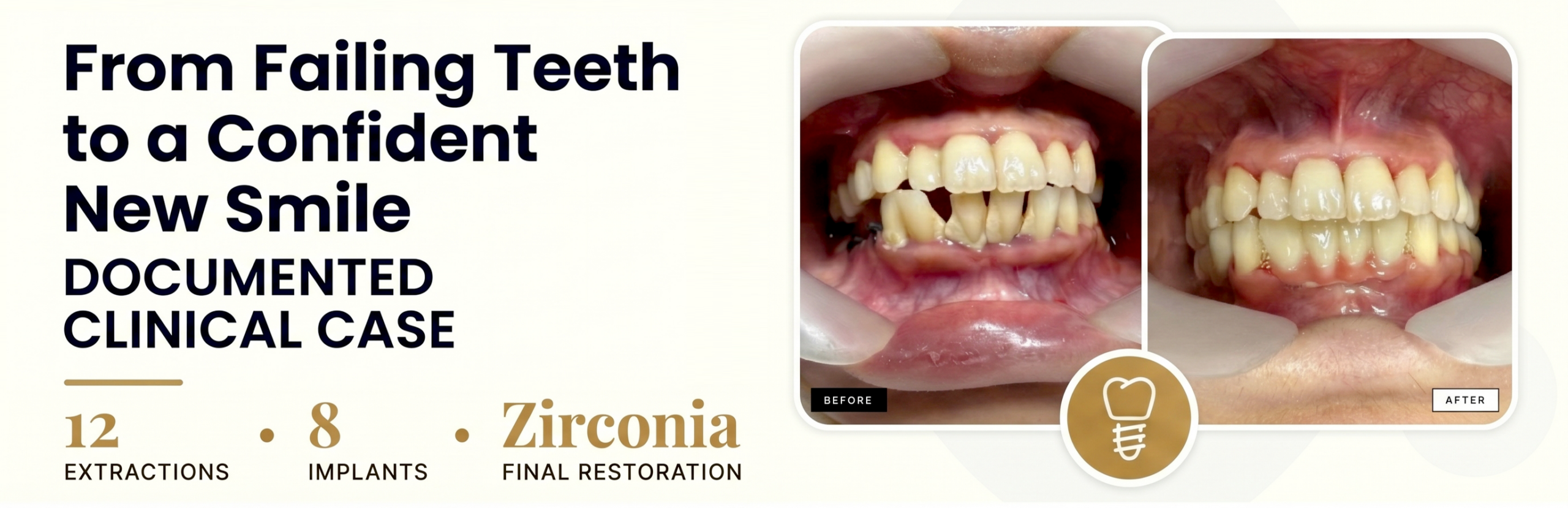
Not all dental cases present with a single, isolated problem. This patient arrived with 12 failing teeth, recurring infection, persistent swelling, and pain that had been building over time.
She was a professional woman in her late 30s who needed a permanent solution, one that would address the full extent of the damage without prolonged disruption to her daily routine.
What the Patient Was Dealing With
The patient presented with multiple failing teeth that were causing ongoing pain and infection. Some teeth had progressed to a point where no restorative treatment could save them. The infection in one area was severe enough to prevent immediate implant placement.
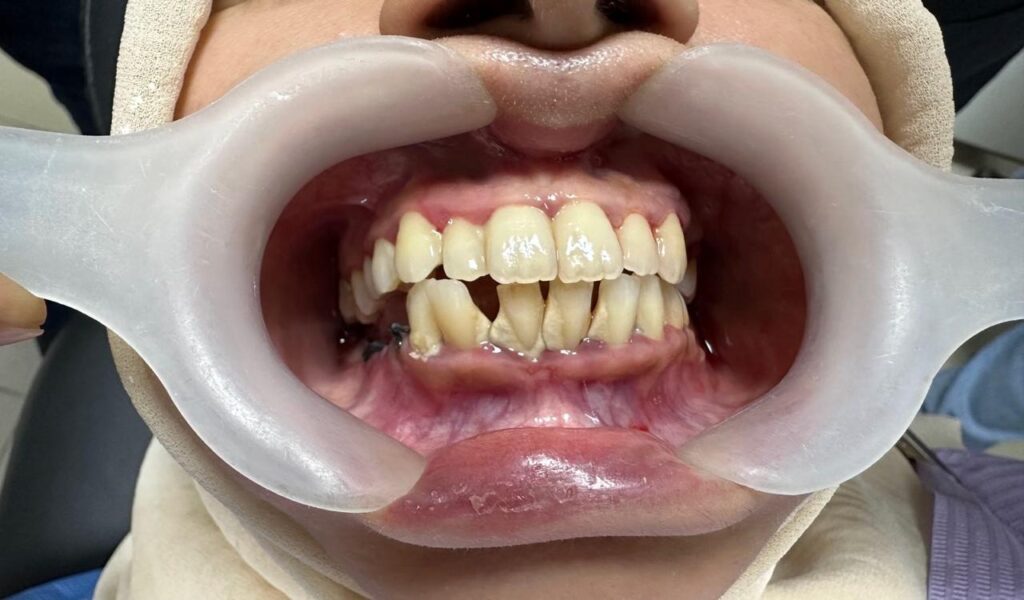
Her concerns were clear from the first consultation. She needed a solution that would last, cause minimal disruption to her daily routine, and result in teeth that looked and felt natural.
The Treatment Plan
Dr. Saqib Minhas assessed the full clinical picture before outlining a phased approach. The goal was to remove all compromised teeth, place implants where conditions allowed, and manage the infection before completing the restoration.
Rushing the process was not an option. Each phase had to be timed correctly to protect bone volume and ensure long-term implant success.
Phase 1: Extractions & Immediate Implants
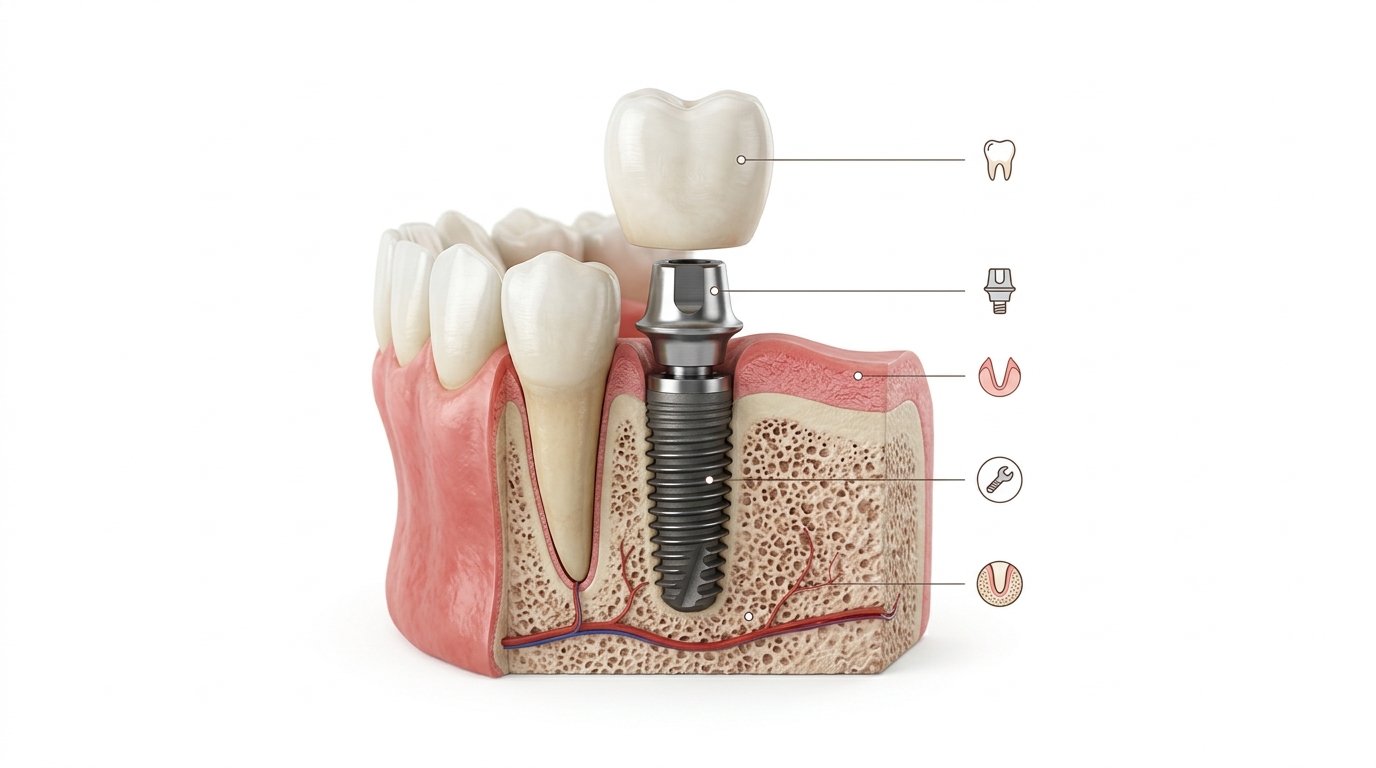
All 12 failing teeth were removed. In the same session, 7 dental implants were placed immediately in sites where the bone and tissue were healthy enough to support them.
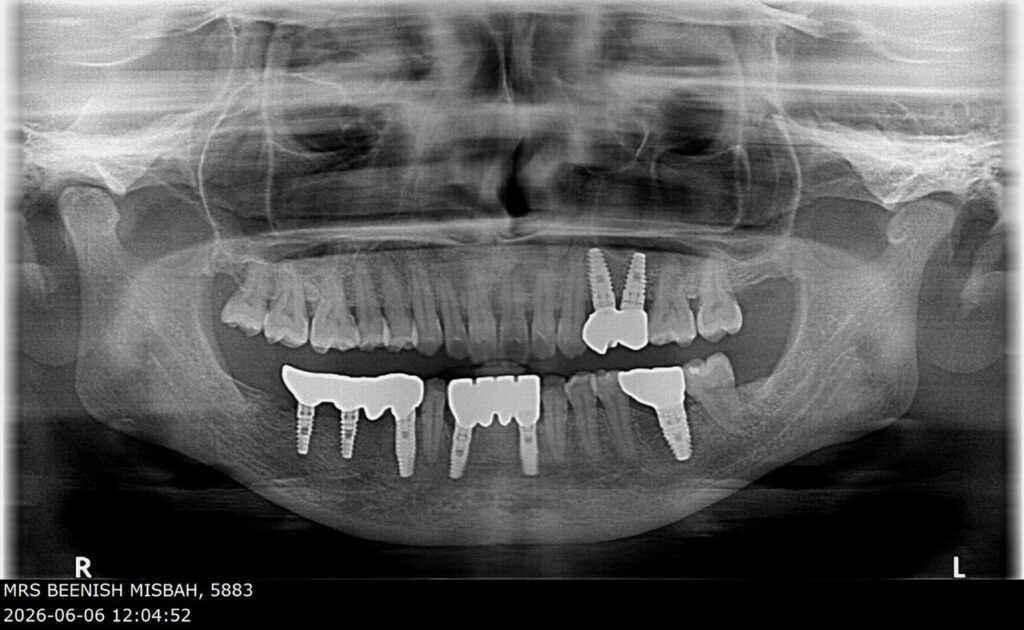
Immediate implant placement is not always possible, but when conditions allow it, it reduces overall treatment time and helps preserve the bone that would otherwise begin to shrink after extraction. Temporary teeth were fitted the same day so the patient could maintain her appearance and basic function throughout the healing period.
Phase 2: Managing the Infection
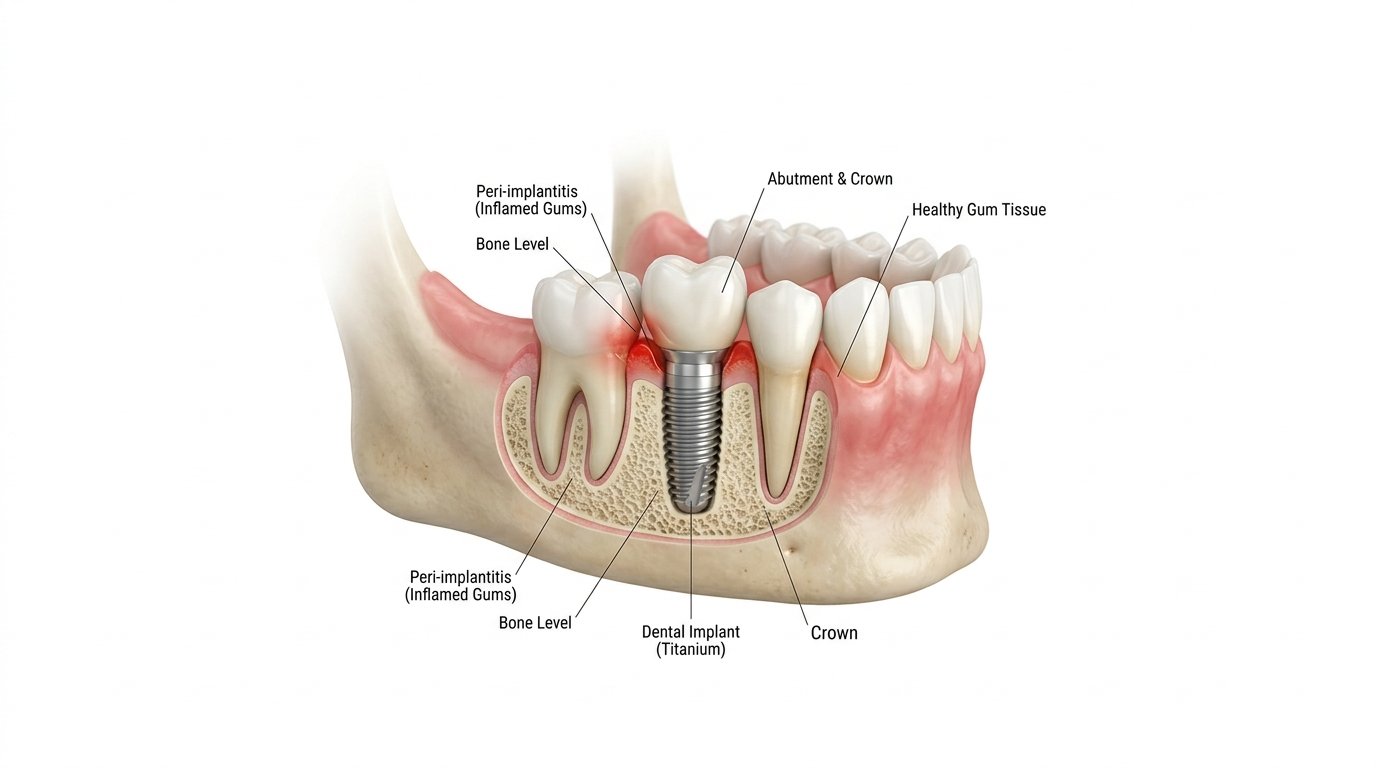
One area required a different approach. The infection in that site was too significant for immediate implant placement. The infected tissue was treated and given time to heal fully before the 8th implant was placed in a separate procedure.
This is a common consideration in complex rehabilitation cases. Placing an implant into infected bone increases the risk of failure, so waiting for resolution is the clinically correct decision even when it adds time to the process.
Phase 3: Final Restoration
Once all 8 implants had fully integrated with the surrounding bone, the final restorations were designed, fabricated, and fitted. Integration was confirmed before any permanent work was placed, as premature loading can compromise long-term implant stability.
The patient received a combination of zirconia crowns and bridges supported across the implant sites. Zirconia was selected for its exceptional strength-to-aesthetics ratio. It is one of the few materials capable of withstanding the full bite forces of a rehabilitated arch while still producing a result that is visually indistinguishable from natural teeth.
Unlike metal-ceramic restorations, zirconia is metal-free, which eliminates the risk of dark margins appearing at the gumline over time. It does not corrode, does not stain, and maintains its appearance without surface degradation.
The fit, bite, and aesthetics were verified across multiple appointments before the restorations were permanently cemented. For a case of this complexity, that level of precision at the final stage is what determines whether the outcome holds over the long term.
Treatment Summary
| Stage | Procedure |
|---|---|
| 1 | Extraction of 12 failing teeth |
| 1 | Placement of 7 dental implants |
| 1 | Temporary teeth fitted |
| 2 | 8th implant placed after infection resolved |
| 3 | Final zirconia crowns and bridges |
The Outcome
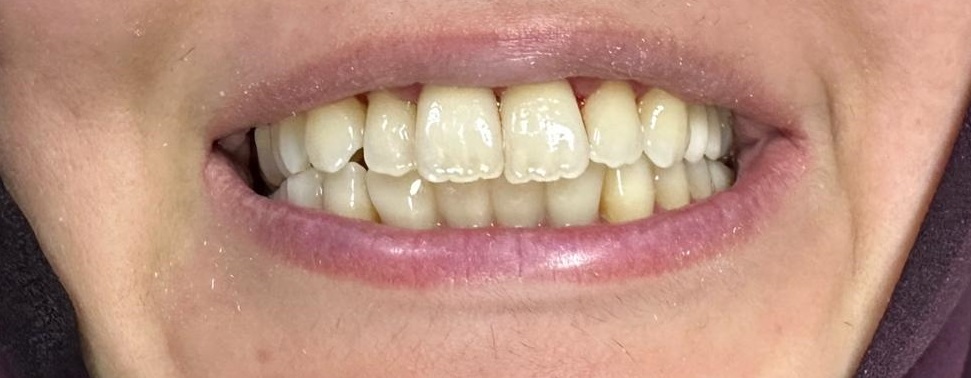
The patient completed a full-mouth rehabilitation that would have seemed daunting at the start of treatment. She was able to continue working throughout the process. The temporary teeth meant she was never without a functional, presentable smile during healing.
By the end of treatment, she had 8 integrated implants supporting a full set of zirconia restorations. The pain, swelling, and infection were gone.
In her own words:
“Dr. Saqib and his team supported me throughout the entire journey, making a complex treatment much easier than I expected.”
What This Case Demonstrates
Complex dental rehabilitation requires careful sequencing, not speed. Removing infected teeth, placing implants where conditions are right, managing problem areas separately, and timing the final restoration correctly are all decisions that affect the long-term result.
Patient communication matters just as much as the clinical work. This patient was anxious about undergoing such extensive treatment. Keeping her informed at every stage and managing her comfort throughout allowed her to complete the process with confidence.
Price Guides
- Hollywood Smile Price
- Metallic Braces Price
- Porcelain Veneers Price
- Wisdom Tooth Extraction Price
- Root Canal Price
Smile Makeover Cost - Teeth Cleaning Price
- Teeth Cap Price
- Dental Bridge Price
- Zirconia Crown Price
Frequently Asked Questions
Is it possible to get temporary teeth on the same day as extractions?
Yes, in many cases. When implants are placed immediately following extractions and the bone is in good condition, temporary teeth can be attached to the implants the same day. This is sometimes called same-day teeth or immediate loading.
Why are not all implants placed at the same time?
When infection is present in a specific area, placing an implant there immediately raises the risk of failure. The infected tissue must be cleared and the bone must heal before an implant can be safely placed. In this case, 7 implants were placed on day one and the 8th was placed once the site had healed.
How long does a full implant rehabilitation take?
The timeline varies depending on the number of implants, the presence of infection, and how quickly the bone integrates with the implants. Most complex cases take between 6 and 12 months from the first appointment to the final restoration.
Why are zirconia crowns used for implant restorations?
Zirconia is extremely strong, resists staining, and has a natural translucency that closely resembles real teeth. It is a well-established material for both single crowns and multi-unit bridges on implants, and it performs reliably over the long term.
Will the treatment be painful?
Most patients are surprised by how manageable the process is with proper anaesthesia and post-treatment pain control. Discomfort after surgery is normal and typically managed with standard pain relief. This patient, despite undergoing multiple extractions and implant placements, was able to maintain her regular work schedule throughout treatment.
Complex Dental Rehabilitation at The Dental Clinic, Karachi
If you are living with failing teeth, recurring infections, or persistent dental pain, The Dental Clinic offers the full range of treatments needed to address these problems comprehensively, from extractions and implants to final restorations.
Dr. Saqib Minhas has extensive experience managing complex, multi-stage implant cases, including situations involving infection, bone loss, and full-arch reconstruction. Each treatment plan is designed around the patient’s specific clinical needs, timeline, and expectations.
To find out whether dental implants or a full rehabilitation is right for you, book a consultation at thedentalclinic.com.pk.
Services We offer:
Titanium Implants | Swiss Implants | German Implants | Korean Implants
Composite Bonding | Fluoride Treatment | Teeth Gap Closure | Invisible Aligners