Room # 10-14, 2nd Floor, Taj Clinics Building, Block 3, Gulshan e Iqbal, Karachi
- Room # 10,11,12,13,14, 2nd Floor, C15/1, Taj Clinics Building, Block 3, Gulshan-e-Iqbal, Karachi.
- info@thedentalclinic.com.pk
- 03160200011
- 12:00pm - 10:00pm
Room # 10-14, 2nd Floor, Taj Clinics Building, Block 3, Gulshan e Iqbal, Karachi
A missing tooth doesn’t just affect your appearance. It triggers bone loss, shifts neighboring teeth, and weakens your bite over time. Generic implant solutions cut corners on the materials and precision your jaw depends on.
Swiss implants change that standard entirely. Engineered in Switzerland to the highest tolerances in implant dentistry, they integrate with jawbone at a cellular level, delivering the stability, longevity, and aesthetics that define a permanent tooth replacement.
At The Dental Clinic, Swiss implant placements are performed by Dr. Saqib Minhas, whose decade of specialized surgical experience in implantology ensures every implant is planned, placed, and restored with the precision these systems demand.
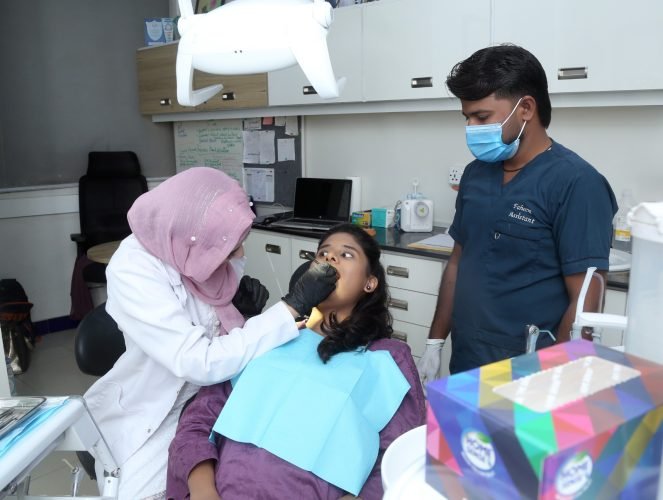
Swiss implants represent the gold standard in implant dentistry, but the system only performs to its potential when placed by a clinician who understands osseointegration mechanics, bone density variation, implant angulation, and prosthetic load distribution.
Our implant specialist brings over ten years of dedicated surgical experience in single-tooth implants, full-arch restorations, and implant-supported prosthetics, working with premium Swiss implant systems trusted by leading periodontists and oral surgeons worldwide.
We follow strict infection control and international sterilization protocols at every stage, from initial incision and implant insertion through to abutment placement and crown delivery.
Before any implant is placed, our team conducts a full evaluation of your bone volume, bone density, gum tissue health, bite forces, and the anatomy of adjacent teeth and nerve structures using advanced clinical imaging. This determines implant diameter, length, angulation, and whether any bone augmentation or sinus lifting is required before placement.
Swiss implants are placed using a protocol-driven surgical approach that preserves crestal bone, protects surrounding soft tissue, and positions each implant at the exact depth and axis required for stable osseointegration and correct prosthetic emergence.
Our team monitors osseointegration at scheduled intervals, confirming bone-to-implant contact before loading the implant with an abutment and crown. This phased approach protects the implant during healing and ensures the final restoration is placed only when integration is clinically confirmed.
At The Dental Clinic, Swiss implant treatment is priced around ₨ 320,000 depending on the Swiss implant system selected, the complexity of the surgical site, whether bone grafting or sinus lifting is required, and the type of crown or prosthetic used to complete the restoration.
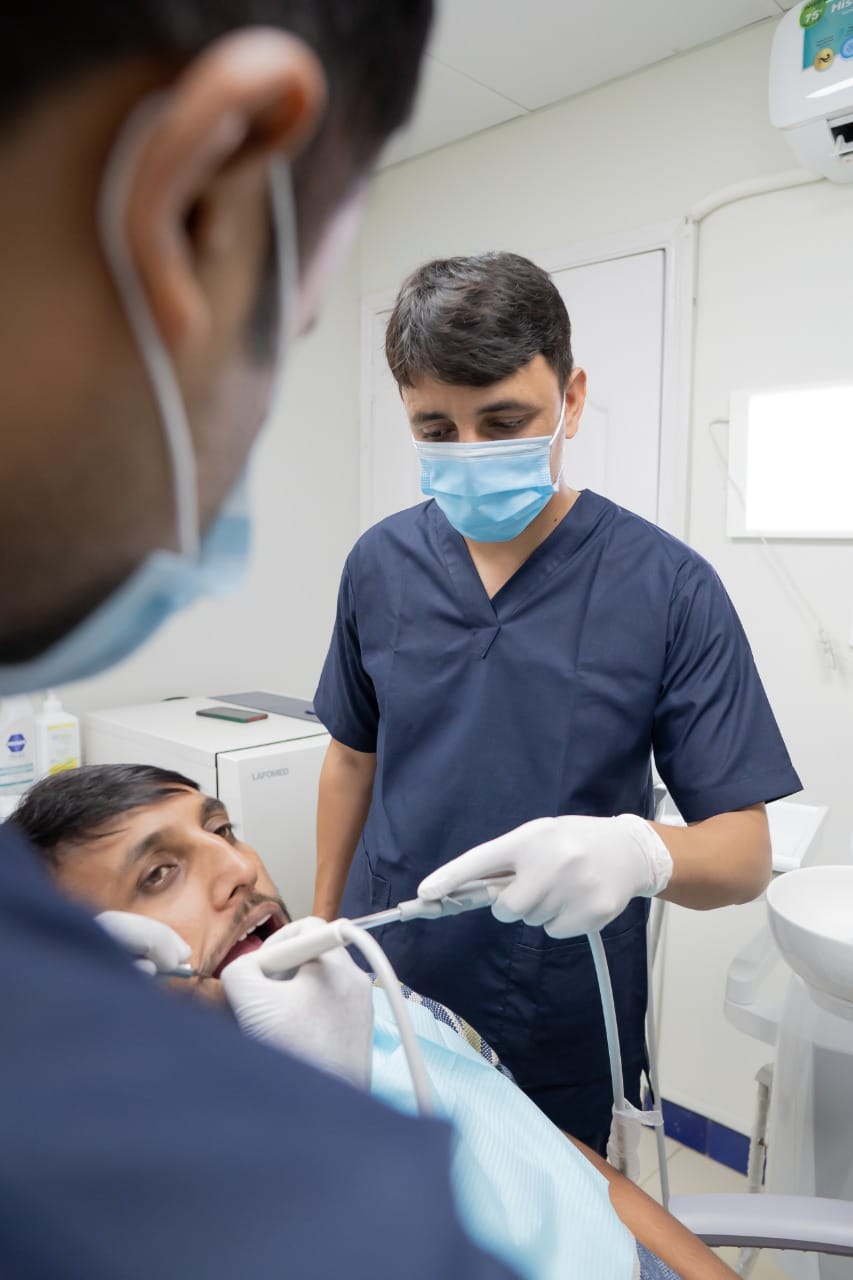
Swiss implants are titanium dental implants manufactured in Switzerland under precision engineering standards, known for superior surface technology, biocompatibility, and long-term osseointegration outcomes.
Swiss implants are produced under tighter manufacturing tolerances and use advanced surface treatments that promote faster, stronger bone integration compared to many generic implant brands. The implant-to-abutment connection is also engineered to minimize micromovement, reducing the risk of bone loss around the implant neck over time.
The application itself takes only a few minutes and is completely painless. You may be advised to avoid eating or drinking for 30 minutes after treatment to allow fluoride to fully absorb into the enamel.
No. The procedure is performed under local anesthesia, and sedation is available for patients who prefer it. Most patients report mild soreness and swelling for 3 to 5 days post-surgery, managed comfortably with prescribed pain relief.
With proper oral hygiene and regular dental check-ups, Swiss implants can last 20 to 30 years or longer. Clinical data shows implant survival rates exceeding 95% at 10 years for patients with healthy bone and well-maintained oral health.
Most adults with a missing tooth or failing tooth are candidates for Swiss implants, provided they have sufficient bone volume and healthy gums. Patients with bone loss may still qualify after bone grafting.
WhatsApp us