Dental implants are a long-term option for replacing missing teeth, but like any surgical procedure, they carry potential risks. These may include infection, delayed healing, nerve injury, sinus complications, bone loss, and implant failure.
Not every patient experiences complications. The risks depend on factors such as oral health, bone quality, medical history, smoking habits, surgical planning, and long-term implant care.
Understanding the possible complications of dental implants can help patients recognise warning signs, make informed treatment decisions, and protect their oral health.
What Are the Main Risks of Dental Implants?
Dental implant risks vary depending on the patient’s condition and the complexity of treatment. Some issues occur during the initial healing period, while others may develop months or years after placement.
The main risks of dental implants include:
- Infection: Bacterial infection around the surgical site or implant.
- Delayed healing or implant failure: The implant may not integrate successfully with the jawbone.
- Nerve injury: Possible tingling, numbness, or altered sensation, particularly after implants in the lower jaw.
- Sinus complications: A potential risk when placing implants in the upper back jaw near the maxillary sinuses.
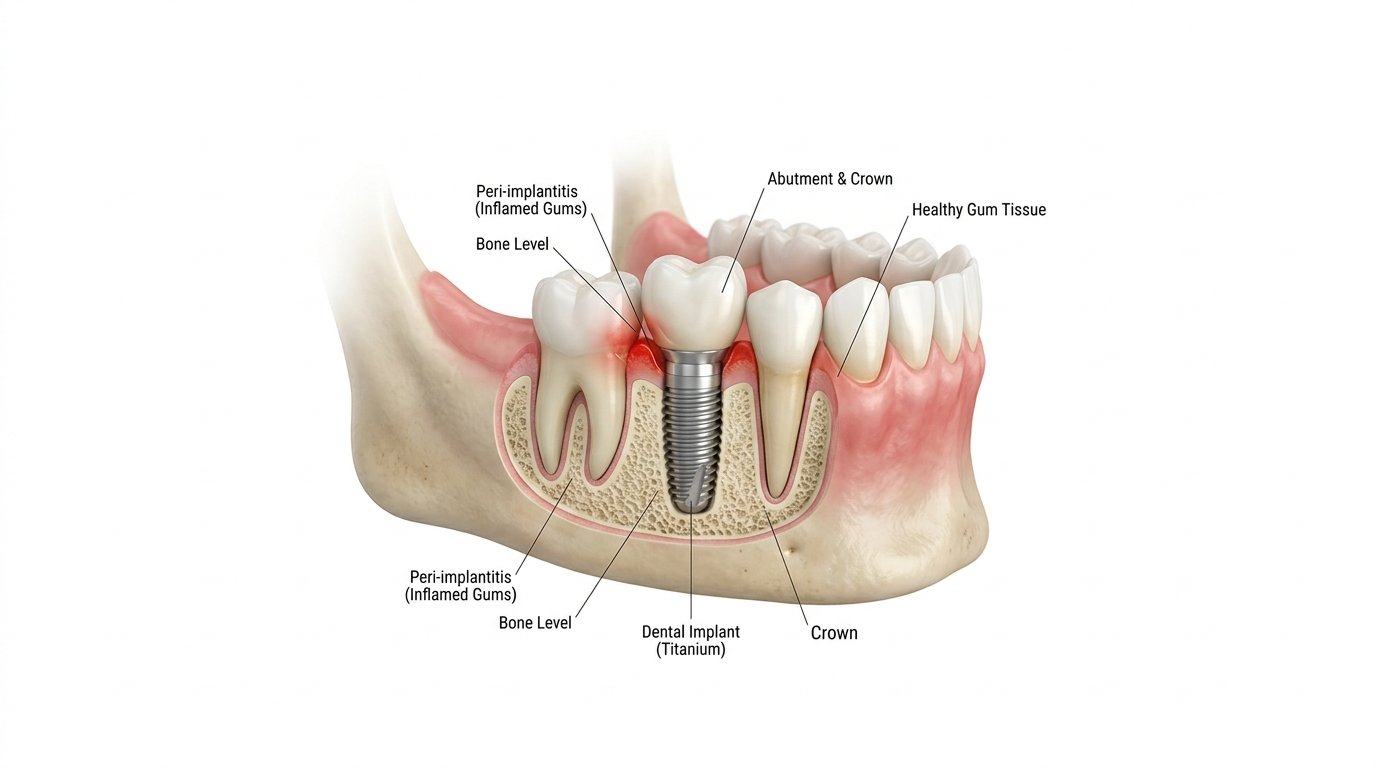
- Peri-implantitis: Inflammation around an implant associated with progressive supporting bone loss.
- Gum recession: Changes in the gum tissue that may expose implant components.
- Mechanical complications: Loosening or fracture of the crown, abutment, screw, or, less commonly, the implant itself.
These complications are possible, not inevitable. A dental professional can assess individual risk factors before recommending treatment.
Common Dental Implant Complications During and After Surgery
1. Pain, Swelling, Bruising, and Bleeding
Mild pain, swelling, bruising, and limited bleeding can occur after dental implant surgery. These symptoms are part of the normal healing process and do not automatically indicate a complication.
Discomfort generally improves over the first several days, although recovery time varies with the extent of surgery and whether additional procedures, such as bone grafting, were performed.
When to seek help: Contact your dentist if pain or swelling worsens instead of improving, bleeding does not stop with the recommended measures, or you develop fever or other concerning symptoms.
2. Dental Implant Infection
Infection can develop around the surgical site or implant. Possible signs include increasing pain, swelling, pus, persistent bleeding, or an unpleasant taste accompanied by other symptoms.
Infection risk may be influenced by oral hygiene, existing gum disease, smoking, medical conditions, and the circumstances of surgery. Not every implant patient develops an infection, and antibiotics do not eliminate every infection risk.
What to do: Contact your dentist if you suspect an infection. Treatment depends on the examination findings and may include cleaning the affected area, addressing the source of infection, and medication or further treatment when clinically indicated.
3. Nerve Injury or Altered Sensation
Implant placement in the lower jaw can potentially affect nearby nerves. Symptoms may include tingling, numbness, burning sensations, or altered feeling in the lower lip, chin, teeth, or tongue, depending on the nerve involved.
Some sensory changes improve with time, but persistent or permanent nerve injury is possible in uncommon cases.
What to do: Contact your treating dentist or oral surgeon promptly if new numbness or altered sensation continues after the local anaesthetic should have worn off. Early assessment is important.
4. Sinus Problems After Upper Jaw Implants
The maxillary sinuses are located above the upper back teeth. Because of their proximity to the jawbone, implant placement in this area may occasionally affect the sinus.
Potential complications include sinus membrane injury or a communication between the mouth and sinus. However, sinus complications do not occur with every upper-jaw implant.
Possible warning signs: Persistent one-sided sinus discomfort, unusual nasal discharge, or fluid passing between the mouth and nose after surgery.
What to do: Contact your dentist or surgeon if these symptoms develop after implant placement. Do not assume that every episode of nasal congestion is related to the implant.
5. Damage to Nearby Teeth or Structures
Dental implant surgery requires careful planning to avoid neighbouring tooth roots, nerves, blood vessels, and other anatomical structures.
Damage to a nearby tooth or root is a possible complication, although appropriate assessment and surgical planning help reduce the risk.
What to do: Report persistent pain in an adjacent tooth, changes in sensation, or other unexpected symptoms following surgery so your dentist can investigate the cause.
Long-Term Dental Implant Complications
1. Peri-Implantitis and Bone Loss
Peri-implantitis is an inflammatory disease affecting the tissues around a dental implant and is associated with progressive loss of supporting bone.
Possible signs include gum bleeding, redness, swelling, tenderness, or pus. Some patients may have few noticeable symptoms, particularly in the earlier stages.
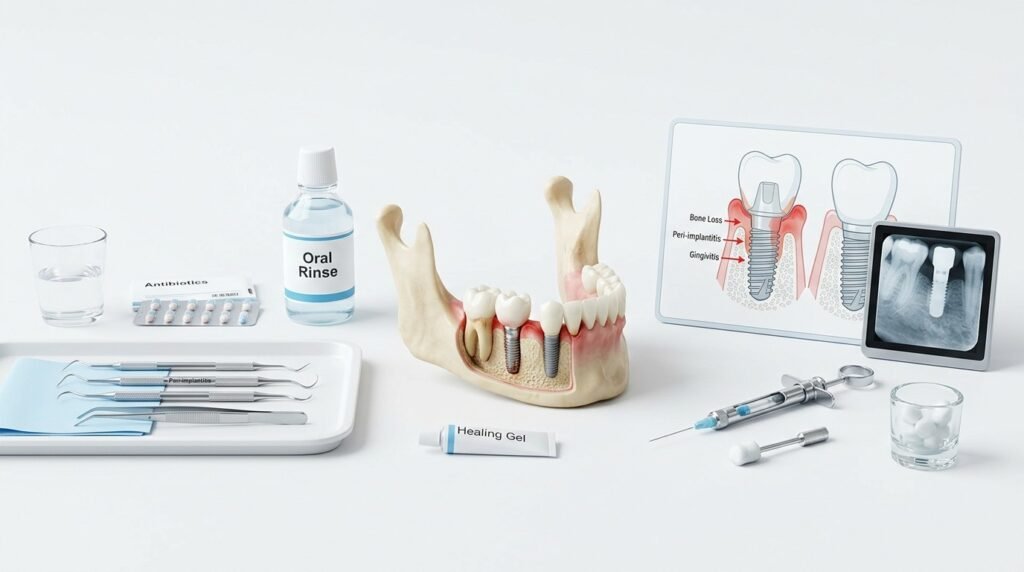
Bone changes around an implant do not automatically mean that peri-implantitis or implant failure has occurred. A dentist evaluates the clinical findings, previous records where available, and dental X-rays to determine whether bone loss is abnormal and progressive.
Treatment: Depending on the severity, management may involve professional cleaning, improved oral hygiene, risk-factor control, and additional surgical treatment. Advanced cases may have a less predictable outcome.
2. Gum Recession Around Dental Implants
Gum recession occurs when the gum tissue moves away from its previous position, potentially exposing part of the implant restoration.
It may affect appearance, particularly for implants near the front teeth. The underlying causes can include tissue anatomy, inflammation, implant positioning, and changes during healing.
Gum recession does not automatically mean that the implant has failed. A dental professional can assess the cause and discuss appropriate management.
3. Loose Dental Implant Crown, Abutment, or Screw
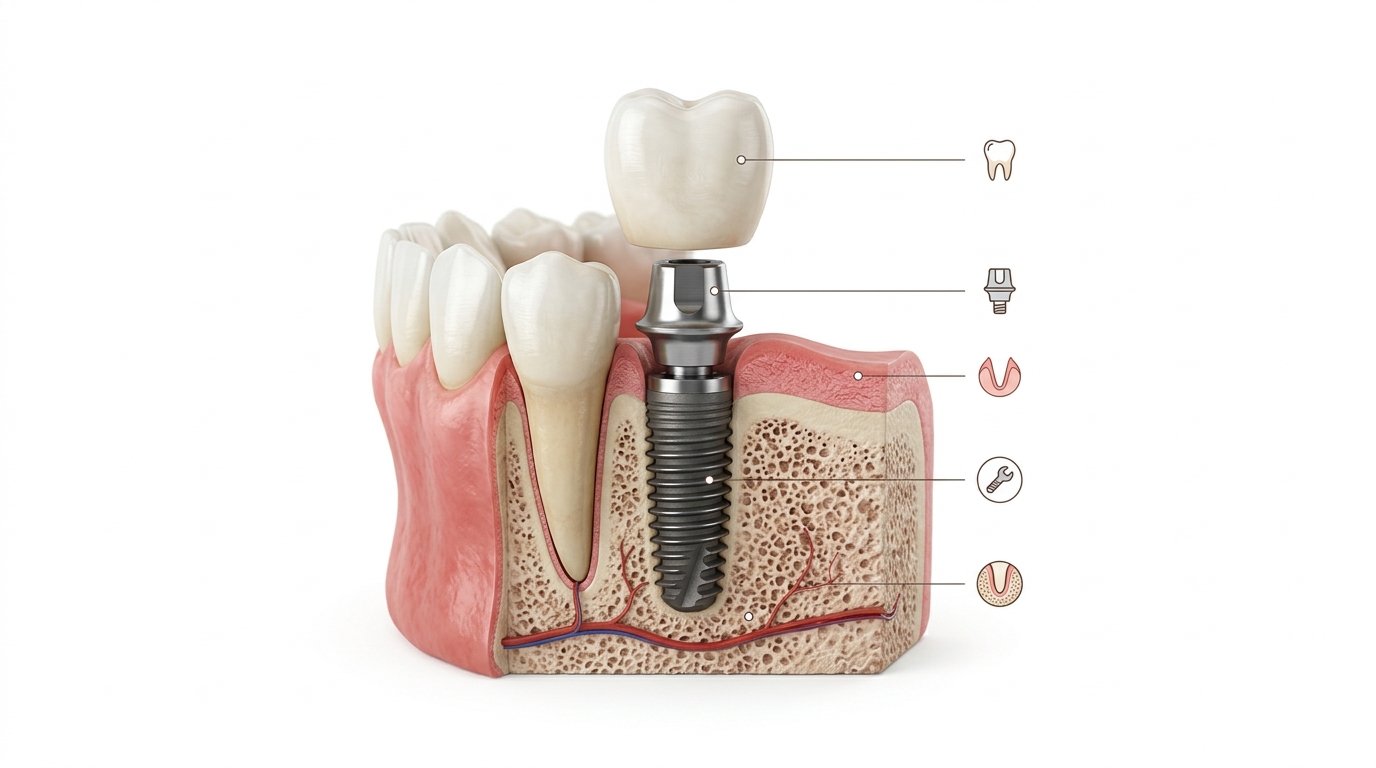
A dental implant restoration includes the implant fixture, the connecting abutment, and the visible crown. These components can experience different problems.
A loose crown or screw is not the same as a loose implant fixture. A mobile implant itself may indicate a more serious problem involving integration or supporting bone.
What to do: Avoid chewing hard foods on the affected side and arrange a dental assessment. Do not attempt to tighten or repair implant components yourself.
4. Implant Fracture and Excessive Biting Forces
Although uncommon, an implant component can fracture under certain conditions. Excessive biting forces, teeth grinding, restoration design, material factors, and mechanical wear may contribute to complications.
A dentist may assess the bite, restoration, and implant components and recommend adjustments or repairs when appropriate. Persistent discomfort or movement should not be ignored.
Signs of Dental Implant Complications You Should Not Ignore
Recognising warning signs early can help prevent some problems from becoming more serious.
| Symptom | Possible concern | Recommended action |
| Mild pain and swelling that gradually improve | Expected postoperative healing | Follow your postoperative instructions |
| Pain or swelling that worsens | Infection or another complication | Contact your dentist promptly |
| Pus, fever, or increasing redness | Possible infection | Arrange prompt dental assessment |
| New or persistent numbness | Possible nerve involvement | Contact your treating surgeon promptly |
| Persistent sinus symptoms after upper-jaw surgery | Possible sinus-related complication | Contact your dentist or surgeon |
| Gum bleeding, swelling, or pus around an established implant | Possible peri-implant disease | Arrange a dental examination |
| A loose crown or screw | Mechanical complication | Arrange a dental assessment |
| Movement of the implant fixture itself | Possible loss of integration or supporting bone | Seek prompt professional assessment |
Seek emergency medical care for difficulty breathing, difficulty swallowing, rapidly spreading facial or neck swelling, or uncontrolled bleeding.
Do not try to diagnose implant failure based on one symptom alone. A dental examination is necessary to identify the underlying cause.
Price Guides
- Hollywood Smile Price
- Metallic Braces Price
- Porcelain Veneers Price
- Wisdom Tooth Extraction Price
- Root Canal Price
Smile Makeover Cost - Teeth Cleaning Price
- Teeth Cap Price
- Dental Bridge Price
- Zirconia Crown Price
What Increases the Risk of Dental Implant Complications?
Not everyone has the same risk of complications. The following factors may affect treatment planning, healing, or long-term implant health.
Patient-Related Risk Factors
Smoking: Smoking can impair healing and is associated with a higher risk of implant-related complications.
Poorly controlled diabetes: Uncontrolled blood glucose can interfere with healing and increase the risk of infection. Suitability for treatment depends on the patient’s overall health and diabetes management.
Existing gum disease: Active periodontal disease should be assessed and managed because inflammation and inadequate plaque control can affect the tissues around implants.
Poor oral hygiene: Plaque accumulation can contribute to inflammation around the implant and increase the risk of peri-implant disease.
Teeth grinding or clenching: Excessive forces may contribute to mechanical complications, particularly when not managed appropriately.
Certain medications and medical treatments: Some medications, previous radiotherapy, and medical conditions may affect surgical planning or healing. Patients should provide their dentist with a complete medical and medication history and should not stop prescribed medication without medical advice.
These factors do not automatically mean that a person cannot receive dental implants. The dentist must evaluate the individual circumstances and discuss the associated risks.
Treatment-Related Risk Factors
Complications may also be influenced by insufficient assessment of bone and gum tissue, implant positioning, proximity to nerves or sinuses, the complexity of the procedure, and the design of the final restoration.
Appropriate examination, treatment planning, surgical technique, and follow-up help reduce avoidable risks but cannot eliminate every possible complication.
How to Prevent Dental Implant Risks and Complications
Although no method can guarantee that complications will never occur, good planning and ongoing care can reduce risk and support long-term implant health.
Before Dental Implant Surgery
- Have a comprehensive dental assessment: Your dentist should evaluate your teeth, gums, bite, medical history, and available bone.
- Discuss imaging and treatment planning: Appropriate dental imaging helps assess the implant site and nearby anatomical structures.
- Manage existing gum disease: Active oral disease should be addressed before proceeding where clinically necessary.
- Discuss medical conditions and medications: Tell your dentist about diabetes, previous radiotherapy, relevant medications, allergies, and other health concerns.
- Avoid smoking: Discuss support for stopping smoking before and after surgery.
- Understand the proposed treatment: Ask about the expected recovery period, potential complications, alternatives, and whether additional procedures such as bone grafting may be required.
During Recovery
- Follow your dentist’s postoperative instructions.
- Keep the surgical area clean using the method recommended by your clinician.
- Eat the foods advised for your stage of recovery and avoid putting unnecessary pressure on the surgical site.
- Use prescribed medication only as directed.
- Attend scheduled follow-up appointments.
- Contact your dentist if symptoms worsen or unexpected warning signs develop.
Long-Term Dental Implant Care
- Brush twice daily using an appropriate toothbrush.
- Clean between your teeth and around implants with suitable interdental cleaning aids.
- Attend regular dental examinations and professional maintenance visits.
- Manage gum disease and other relevant health conditions.
- Discuss teeth grinding, clenching, or bite problems with your dentist.
- Seek assessment if you notice bleeding, swelling, persistent discomfort, or looseness.
Dental implants do not develop tooth decay in the same way as natural teeth, but the surrounding gum and bone can still become diseased. Daily cleaning and professional maintenance remain essential.
When Should You Consult a Dental Implant Specialist in Karachi?
If you are considering dental implants or experiencing symptoms after implant surgery, a professional assessment can help identify your options and the risks relevant to your situation.
At The Dental Clinic in Karachi, patients can enquire about dental implant treatment and discuss their oral health, treatment requirements, and suitability with the dental team.
Before proceeding, ask about the proposed treatment plan, the need for imaging or additional procedures, the expected recovery period, maintenance requirements, and potential complications.
Learn more about dental implant services in Karachi or arrange a consultation to discuss your individual needs.
Frequently Asked Questions
What are the most common complications of dental implants?
Short-term pain, swelling, and bruising may occur after surgery. Other possible complications include infection, delayed healing, peri-implant disease, gum changes, and mechanical problems involving the restoration. The likelihood varies between patients and procedures.
What are the signs of dental implant failure?
Possible warning signs include persistent or worsening pain, unusual movement of the implant fixture, swelling, pus, or changes in the surrounding gum tissue. However, symptoms alone cannot confirm failure; a dental examination is required.
Can dental implants cause permanent nerve damage?
Nerve injury is a recognised but uncommon complication, particularly when implants are placed near nerves in the lower jaw. Some sensory changes improve, but persistent or permanent symptoms are possible. New numbness or altered sensation after surgery should be reported promptly.
Can dental implants cause bone loss?
Yes. Bone loss can occur around implants for several reasons, including peri-implantitis and other biological or mechanical factors. Not every bone-level change indicates disease or implant failure. Assessment of the clinical findings and appropriate imaging helps determine whether treatment is needed.
Can dental implant complications be treated?
Many complications can be managed, but treatment depends on the underlying cause and severity. Options may include cleaning, treatment of infection, restoration repair, additional surgery, or implant removal. No particular outcome can be guaranteed.
Who may be at higher risk of dental implant complications?
People who smoke, have poorly controlled diabetes, have active gum disease, or struggle with plaque control may have an increased risk. Other medical conditions, medications, anatomical factors, and mechanical forces may also matter. Individual suitability should be assessed by a dental professional.
How can I reduce the risk of dental implant failure?
Appropriate treatment planning, management of existing oral disease, good daily cleaning, following postoperative instructions, avoiding smoking, and attending maintenance appointments can reduce risk. However, these measures cannot guarantee that an implant will never develop a complication.
How long do dental implant complications take to appear?
Some complications occur during the initial healing period, while others may develop months or years after placement. Regular dental reviews help identify problems that may not cause obvious symptoms at first.
Conclusion
Dental implants can provide a durable option for replacing missing teeth, but they are not free from risk. Potential complications include infection, nerve injury, sinus-related problems, delayed healing, peri-implantitis, bone loss, and mechanical failure.
Understanding these risks, managing relevant health conditions, following postoperative instructions, and maintaining regular dental care can help support a better outcome. If you notice persistent pain, swelling, bleeding, numbness, or implant movement, seek professional assessment rather than attempting to diagnose or treat the problem yourself.
For patients considering treatment or concerned about existing implants, The Dental Clinic in Karachi can be contacted to discuss dental implant assessment and available treatment options.
Services We offer:
Titanium Implants | Swiss Implants | German Implants | Korean Implants
Composite Bonding | Fluoride Treatment | Teeth Gap Closure | Invisible Aligners