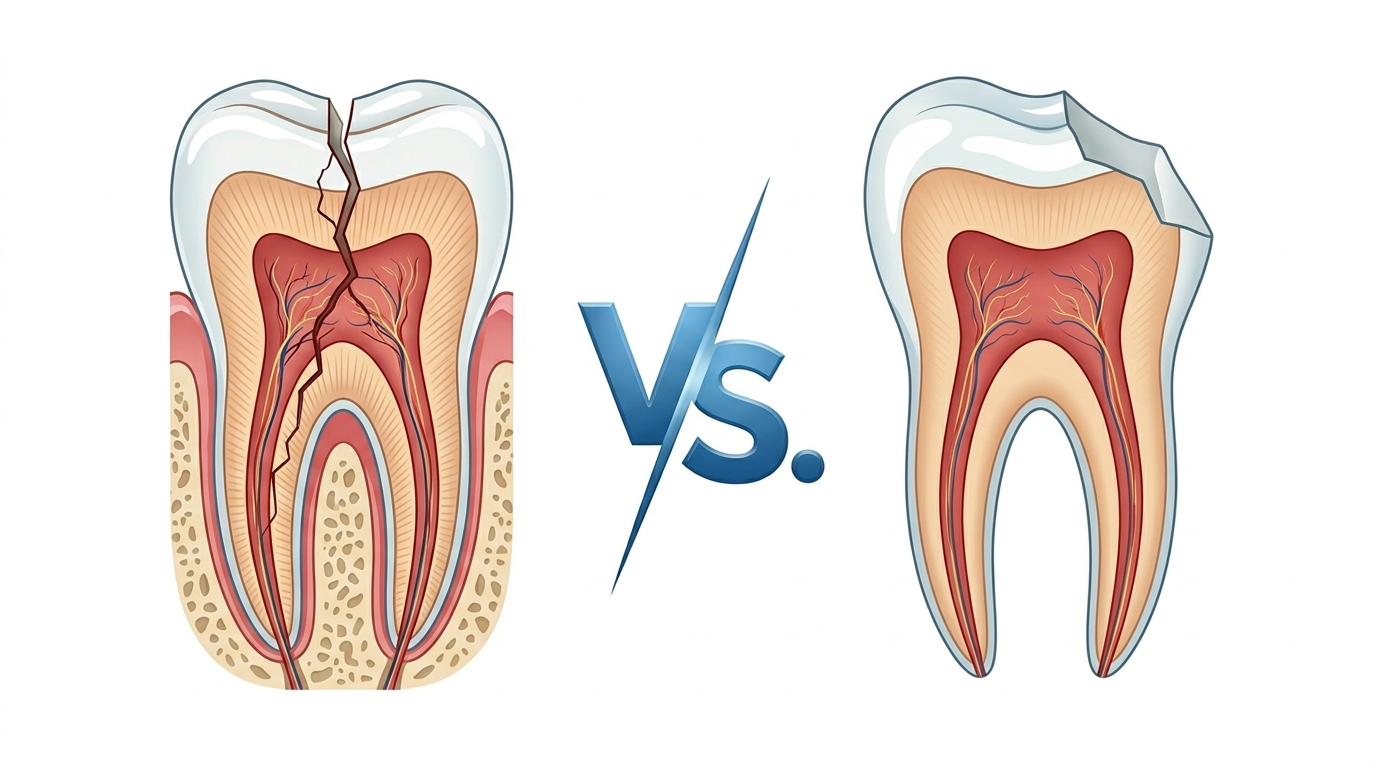
You bit into something hard and now your tooth feels wrong. Maybe you can see a small piece missing. Maybe you just feel sharp pain every time you bite down but cannot see anything broken. One of these is a chipped tooth. The other is a cracked tooth.
They are not the same problem and they do not need the same treatment. Knowing the difference is what determines whether you walk out of a clinic with your tooth saved or with a gap where it used to be.
What Is a Chipped Tooth?
A chipped tooth is a surface-level break where a small piece of enamel has broken off. It is the most common dental injury and in most cases does not affect the inner pulp or nerve. Chips happen from biting something hard, a minor fall, contact sports, or a sudden temperature change on a weakened tooth. Most chips are cosmetic problems that still need prompt attention to prevent further breakage.
What Is a Cracked Tooth?
A cracked tooth is structurally more serious. The crack runs vertically, horizontally, or diagonally through the tooth, sometimes deep enough to reach the pulp, sometimes splitting toward the root. It is often invisible to the naked eye and does not always show on an X-ray, yet causes significant internal damage over time.
Cracks develop from teeth grinding, biting hard foods repeatedly, large old fillings, or trauma. Unlike a chip, a crack worsens with every bite, flexing open and closed under chewing pressure and spreading deeper into the tooth.
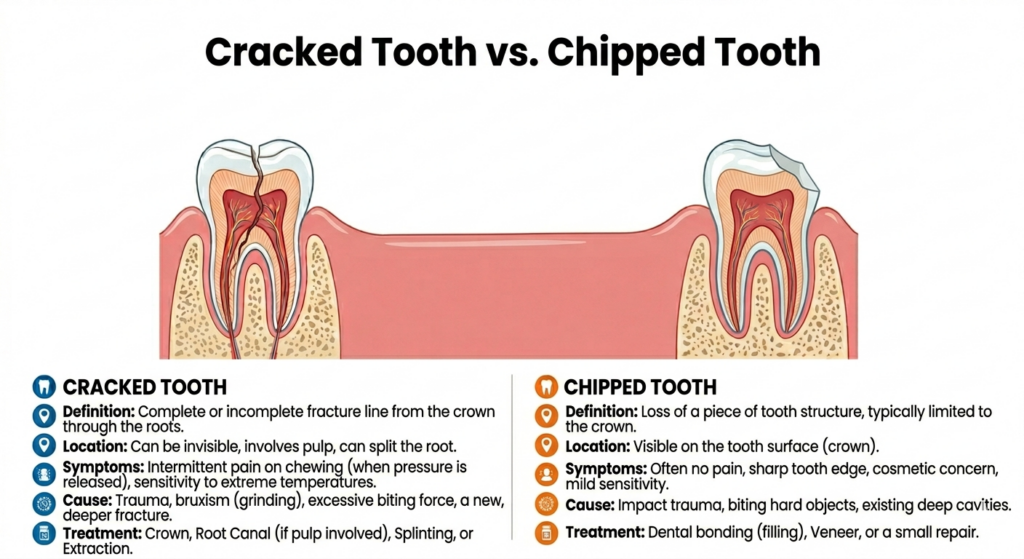
Cracked Tooth vs Chipped Tooth
| Chipped Tooth | Cracked Tooth | |
|---|---|---|
| Damage location | Outer enamel surface | Through the tooth structure |
| Visibility | Usually visible | Often invisible to the eye |
| Pain pattern | Mild or none | Sharp on biting, releases when pressure is off |
| Sensitivity | Mild to cold | Severe: cold, heat, sweet, pressure |
| Emergency level | Low to moderate | Moderate to high |
| Gets worse over time | Only if ignored | Yes, actively spreads with chewing |
| Nerve involvement | Rare | Common in deep cracks |
| Treatment | Bonding, veneer, crown | Crown, root canal, or extraction |
How to Tell Which One You Have
A chipped tooth is usually visible. You can see the missing piece, feel a jagged edge with your tongue, or notice a change in your bite. Pain is mild and triggered by cold air or cold drinks.
A cracked tooth is trickier. The classic sign is pain that spikes sharply when you bite down and disappears the moment you release pressure. You may also feel sensitivity to heat, cold, or sweet foods that lingers for several seconds. If you have these symptoms but cannot see any obvious damage, that is a cracked tooth until proven otherwise.
Treatment for a Chipped Tooth
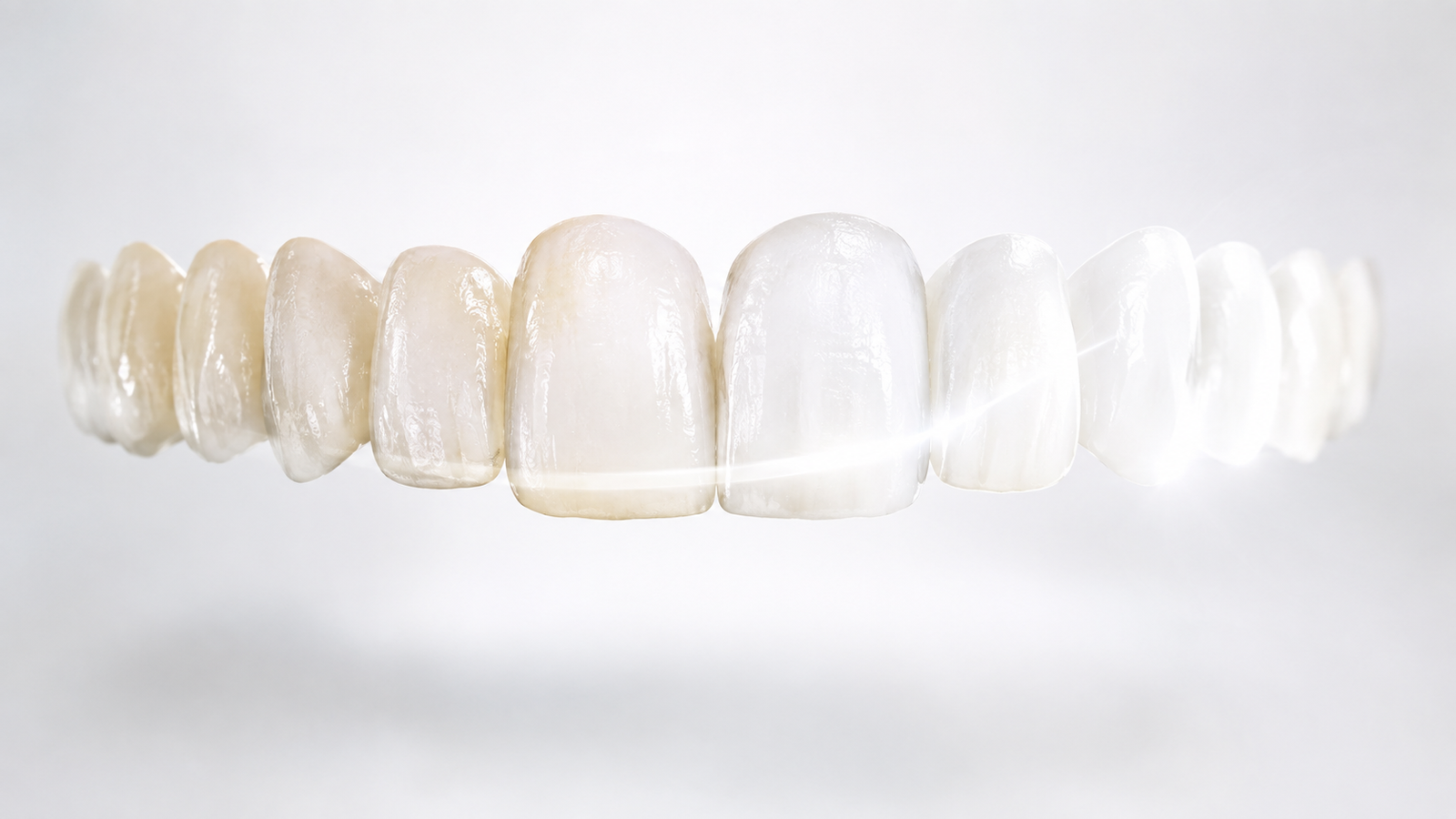
Small chips are fixed with dental bonding, a tooth-coloured resin applied and shaped in a single visit. Larger chips on front teeth are best restored with a porcelain veneer. When the chip has weakened the overall tooth structure, a dental crown caps and protects the entire tooth from further breakage.
Treatment for a Cracked Tooth
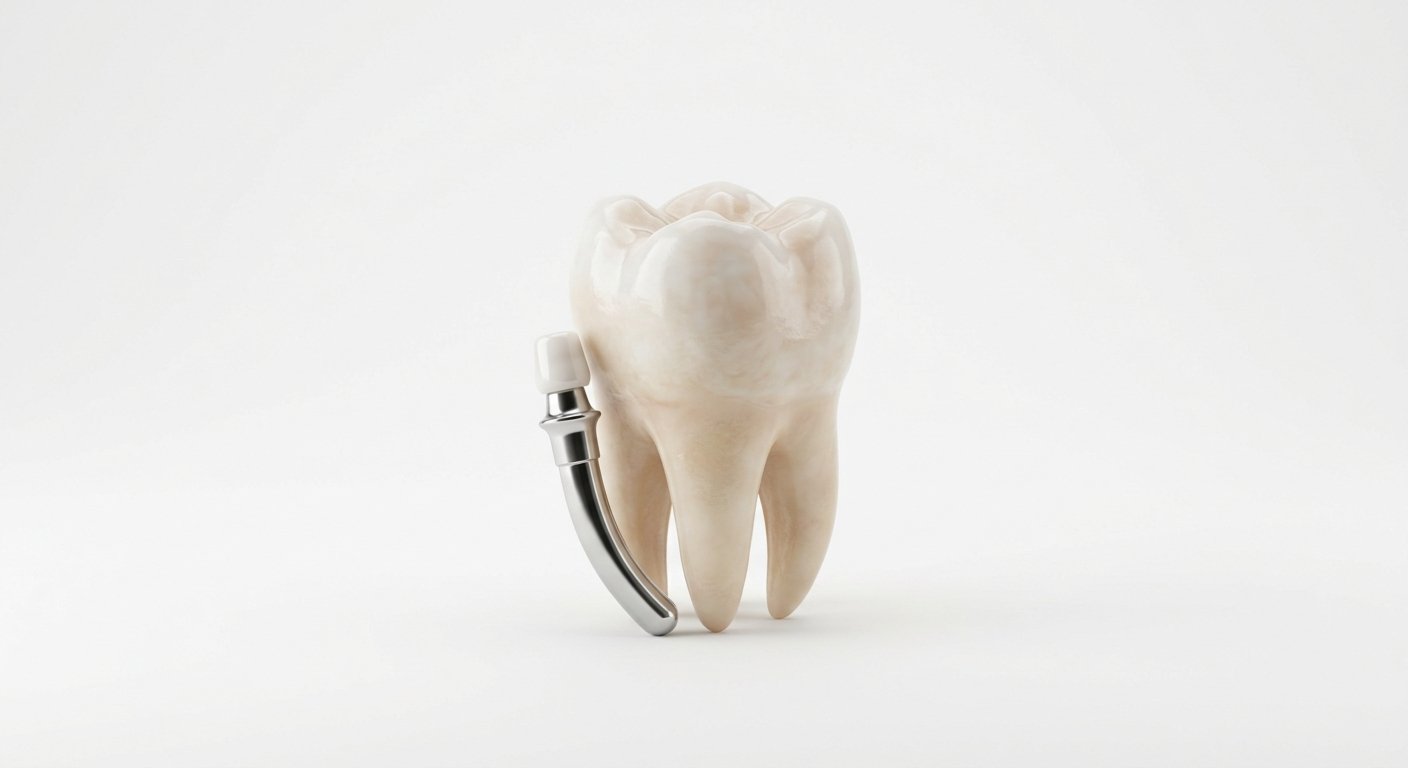
A crack confined to the outer enamel is treated with a crown that holds the tooth together and stops the crack from spreading. When the crack has reached the inner pulp, a root canal removes the damaged nerve first, followed by a crown. If the crack has split the root, extraction is the only option and the tooth can be replaced with a dental implant.
A cracked tooth does not heal on its own. Every day without treatment the crack deepens.
Can You Ignore Either One?
Leaving a chipped tooth unprotected allows bacteria to enter and decay to start. What begins as a cosmetic issue becomes a cavity, then an abscess.
A cracked tooth ignored long enough always ends in root canal or extraction. Catching it early, when a crown alone can fix it, is significantly cheaper and far less invasive.
Why The Dental Clinic Karachi Is the Right Choice
Most clinics in Karachi treat a cracked tooth the same way they treat a chipped tooth: a quick look and a prescription that never addresses the real problem. At The Dental Clinic Karachi, we diagnose before we treat.
Every case goes through high-magnification examination and digital X-ray analysis in the first appointment. We use a bite stick test to isolate exactly which cusp is causing pain, because a crack misread as sensitivity leads to the wrong procedure and unnecessary tooth loss.
For chipped teeth, bonding and veneers are matched to your exact shade. For cracked teeth, extraction is the last resort, not the default. Patients across Karachi come to us because we save teeth other clinics have already written off.
Dr. Saqib at The Dental Clinic Karachi: Why Patients Trust Him With This
Diagnosing a cracked tooth correctly requires more than a quick visual check. Dr. Saqib has treated hundreds of cracked and chipped tooth cases in Karachi, including patients who were told by other clinics that their tooth could not be saved.
His approach starts with a precise diagnosis using high-magnification examination and a bite stick test that pinpoints exactly where the crack is and how deep it runs before any treatment decision is made.
Patients come to Dr. Saqib specifically because he does not default to extraction. If the tooth can be saved with a crown or a root canal, that is the plan. If your tooth does not feel right, book a consultation with Dr. Saqib at The Dental Clinic Karachi today.
Frequently Asked Questions
Can a cracked tooth heal on its own?
No. Tooth structure does not regenerate. A crack stays the same or gets worse, never better.
Does a chipped tooth always need a crown?
No. Small chips are fixed with bonding. A crown is only needed when the chip compromises the tooth’s structural integrity.
How do dentists find invisible cracks?
Through magnified examination, a bite stick test to isolate which cusp causes pain, and sometimes a dye that highlights the crack line.
Can I eat normally with a cracked tooth?
Avoid chewing on that side until treated. Every bite risks splitting the tooth further.