Root canal treatment is done in 3 stages, and each stage solves one specific problem inside the tooth. Knowing the stages of root canal treatment ahead of time helps you understand why your dentist may book more than one visit, and why the final crown matters as much as the cleaning.
This guide explains each stage in plain language, from the first X-ray to the final restoration. You will also learn what each stage feels like and how long recovery takes, so you know what to expect before you sit in the chair.
What Happens Before the First Stage?
Treatment starts with a diagnosis. Your dentist checks the tooth for pain on biting, sensitivity to hot or cold, swelling or discoloration, then takes a dental X-ray to see the roots and how far the infection has spread.
The X-ray also shows how many canals the tooth has. Front teeth usually have one canal, while molars can have three or four, which affects how long root canal treatment takes.
Once the dentist confirms the tooth can be saved, the area is numbed with local anesthesia. Most patients feel pressure but no pain, which is why the old fear around whether a root canal is painful no longer matches the modern procedure.
Stage 1: How Is the Infected Root Canal Cleaned?
Stage 1 removes everything that causes the infection. It is the longest and most important part of endodontic treatment, because bacteria left behind can restart the problem later.
Isolating and Opening the Tooth
The dentist places a thin rubber sheet, called a dental dam, around the tooth. It keeps saliva and bacteria out of the tooth and stops small instruments or rinses from reaching your throat.
A small opening is then made in the top of the tooth, known as an access cavity. This opening gives the dentist a direct path into the pulp chamber.
Removing the Infected Pulp
The pulp is the soft tissue inside the tooth that holds the nerve and blood vessels. When deep decay, a crack or an injury lets bacteria reach it, the pulp becomes inflamed or dies, and that causes the throbbing toothache.
The dentist removes this tissue from the pulp chamber and from each root canal down to the root tip. Once the nerve tissue is gone, the source of the pain is gone too.
Shaping and Disinfecting the Canals
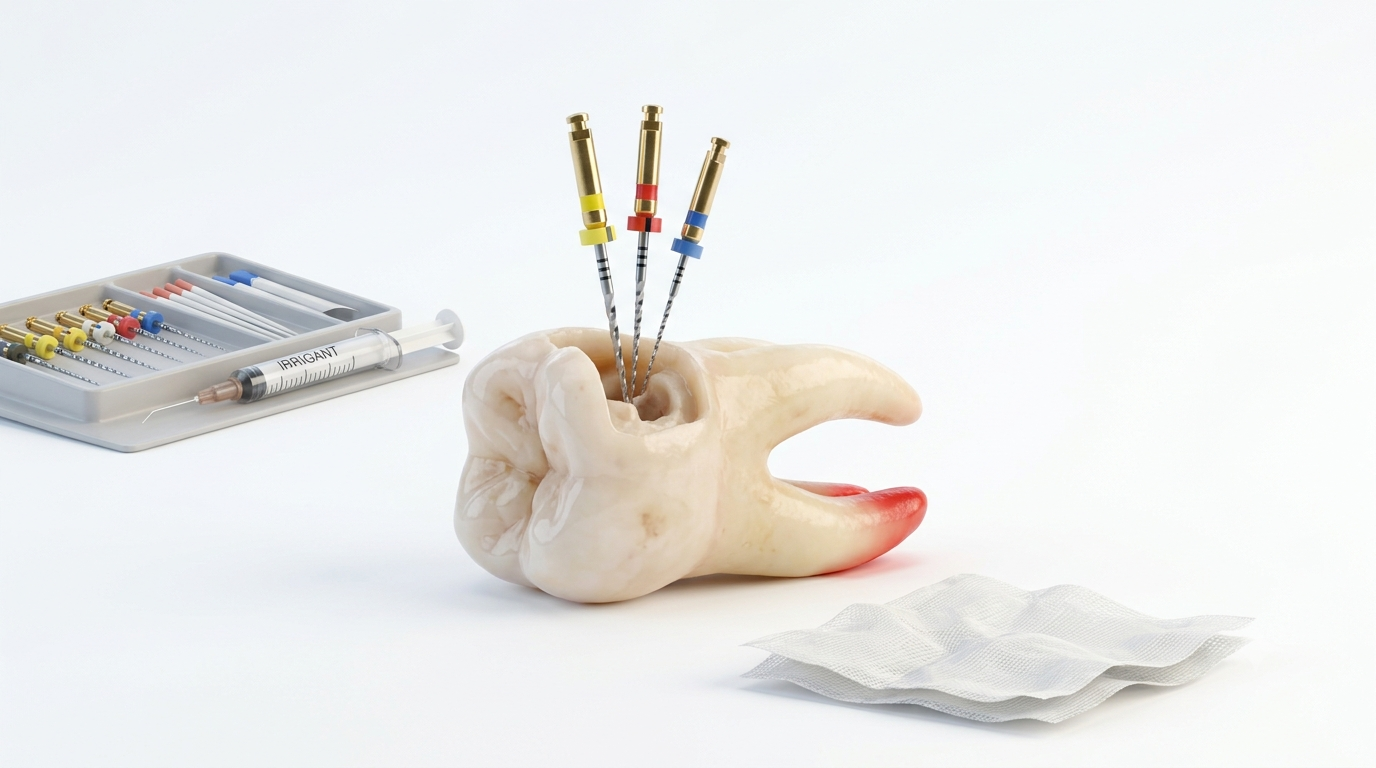
Root canals are narrow and often curved. The dentist uses fine instruments called files to widen and smooth each canal, measuring its length so the cleaning stops exactly at the root tip.
Between files, the canals are rinsed with a disinfecting solution, most commonly diluted sodium hypochlorite. If the infection is severe or an abscess is present, the dentist may place a medicated dressing inside the tooth and close it with a temporary filling until the next visit.
Stage 2: How Are the Root Canals Filled and Sealed?
Stage 2 fills the cleaned, empty canals so bacteria have no space to return. Dentists call this step obturation.
What Is Gutta-Percha?
Gutta-percha is a rubber-like material made from the sap of a tropical tree. It softens with heat, adapts closely to the shape of each canal and is well tolerated by the body.
The dentist coats it with a sealer cement and packs it into every canal up to the root tip. A final X-ray then confirms the canals are filled completely, with no gaps.
Why Is a Temporary Filling Placed?
After sealing, the opening at the top of the tooth still needs to be closed. Your dentist often places a temporary filling at this point, especially when a crown is planned, because the crown is made separately.
The temporary filling protects the sealed canals for a short period only. It can wear down or leak, so it is not the final repair.
Stage 3: How Is the Tooth Restored After a Root Canal?
Stage 3 gives the tooth back its strength and function. A root canal treated tooth is more brittle than a healthy one, because it has lost its inner tissue and often a large part of its structure to decay.
Filling or Crown: Which One Do You Need?
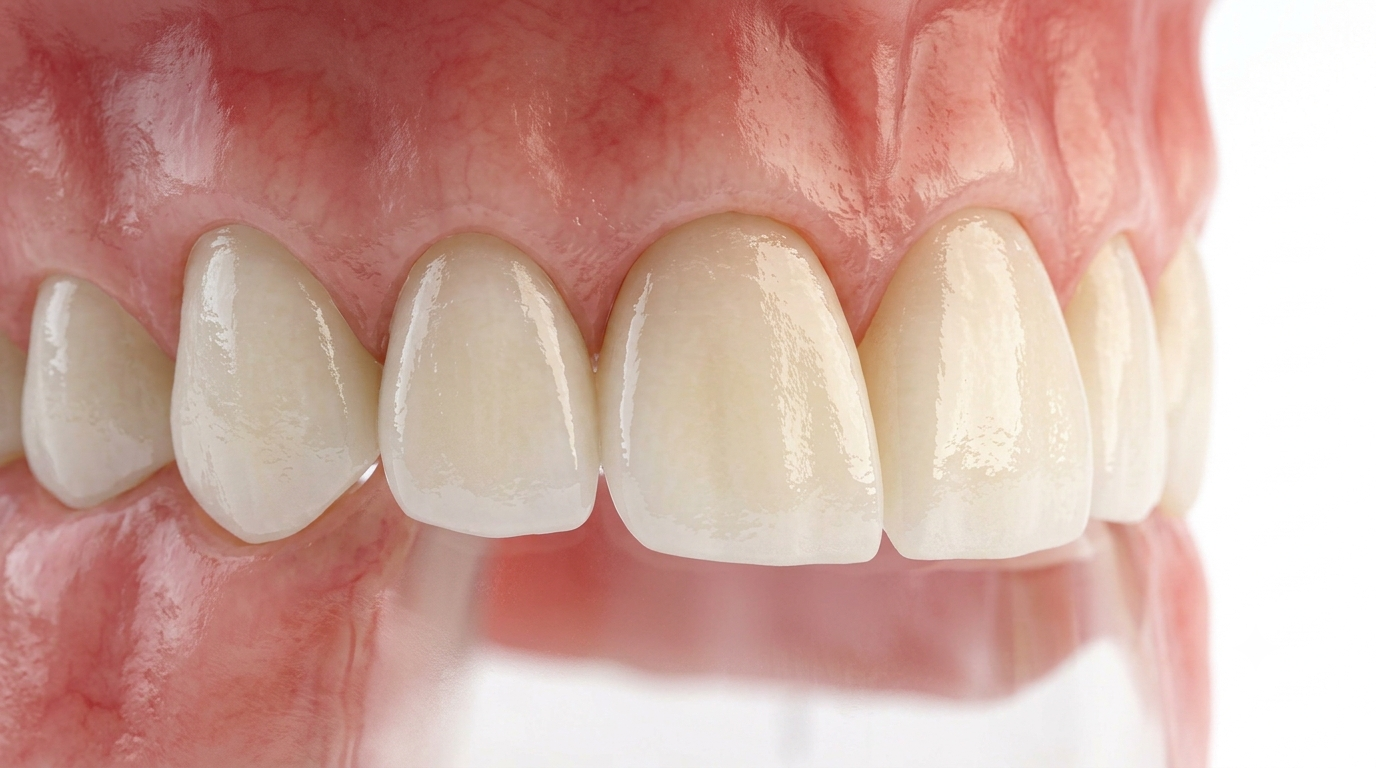
Front teeth that still have most of their structure can often be restored with a tooth-colored composite filling. Premolars and molars take the heaviest chewing forces, so they usually need a dental crown to cover and protect them.
This choice has a measurable effect. A widely cited study in the Journal of Prosthetic Dentistry found that root canal treated teeth left without a crown were lost at about six times the rate of crowned teeth.
What If Too Little Tooth Is Left?
When decay has destroyed much of the visible tooth, the dentist first rebuilds it with a post and core. The post sits inside one of the sealed canals and anchors a core of filling material, which gives the crown a solid base.
Choosing the Crown Material
Metal, porcelain and zirconia crowns each balance strength and appearance differently. Zirconia suits both front and back teeth because it is strong and tooth-colored, and you can compare options in our zirconia crown price guide.
The 3 Stages of Root Canal Treatment at a Glance
| Stage | What the Dentist Does | Why It Matters | What You Feel |
|---|---|---|---|
| Before treatment | Examines the tooth, takes an X-ray, gives local anesthesia | Confirms the tooth can be saved | A brief pinch from the injection |
| Stage 1: Cleaning | Removes the infected pulp, shapes and disinfects the canals | Removes the infection | Pressure and vibration, no sharp pain |
| Stage 2: Filling and sealing | Fills the canals with gutta-percha and sealer, places a temporary filling | Stops bacteria from returning | Similar to Stage 1, usually shorter |
| Stage 3: Restoration | Places a permanent filling or crown, with a post and core if needed | Restores strength and chewing | Similar to a regular filling or crown fitting |
How Many Visits Does Root Canal Treatment Take?
Most root canal treatments are finished in one or two appointments, plus a visit to fit the crown. Stages 1 and 2 are often completed in the same sitting when the infection is mild and the canals are straightforward.
A second visit is common for molars with several curved canals, or when an abscess needs time to settle under a medicated dressing. Each appointment typically lasts 60 to 90 minutes.
If you are visiting Karachi from abroad, share your travel dates at your consultation. Your dentist can then plan all 3 stages, including the crown, around the time you have in the city.
What Does Recovery Feel Like After Each Stage?
After Stages 1 and 2, the tooth and nearby gum often feel tender for two to three days. This comes from inflammation around the root tip and usually settles with the over-the-counter painkillers your dentist recommends.
Avoid chewing hard food on the treated side until the final restoration is in place. The tooth is fragile at this point, and the temporary filling is not built for heavy biting.
Call your dentist if swelling increases, pain worsens after three days or the temporary filling falls out. After Stage 3, the tooth should look, feel and work like your other teeth.
Who Needs Root Canal Treatment?
You may need a root canal when the pulp is infected or permanently inflamed but the tooth is still strong enough to keep. Common signs include pain that lingers after hot or cold drinks, throbbing pain that wakes you at night, pain when biting, a pimple-like bump on the gum and a tooth that has turned grey or dark.
Some teeth cannot be saved. If a tooth is split below the gum line or has too little healthy root left, your dentist may recommend tooth extraction followed by a replacement.
Keeping your natural tooth is usually the better choice when it is possible. Clinical reviews report that roughly 9 in 10 root canal treated teeth are still in place and working several years after treatment.
Do Children Go Through the Same Stages?
Baby teeth follow the same idea through a simpler process. When decay reaches the pulp of a milk tooth, the dentist removes either the infected upper part of the pulp (a pulpotomy) or all of it (a pulpectomy), then seals the tooth and usually covers it with a crown.
Saving a baby tooth holds space for the adult tooth growing underneath. Our child dentist in Karachi page explains how these visits are kept short and comfortable for younger patients.
Frequently Asked Questions
Is a root canal done in one visit or three?
The 3 stages describe the steps, not the number of appointments. Stages 1 and 2 are often done in a single sitting, and Stage 3 happens at a separate visit once the crown or permanent filling is ready. Complex molars or severe infections may need one extra visit.
Does each stage of a root canal hurt?
No stage should be painful, because the tooth is numbed before work begins. You will feel pressure and vibration during cleaning and filling. Mild soreness for a few days afterward is normal and short-lived.
How long can I wait between the root canal and the crown?
Most dentists place the crown within one to two weeks after the canals are sealed. Waiting months raises the risk of the tooth cracking or the temporary filling leaking, which can reinfect the canals and lead to retreatment or extraction.
Can I eat between root canal appointments?
Yes, once the numbness wears off, which usually takes two to three hours. Chew on the other side, avoid hard or sticky food and brush gently around the temporary filling.
Is it better to pull the tooth than have a root canal?
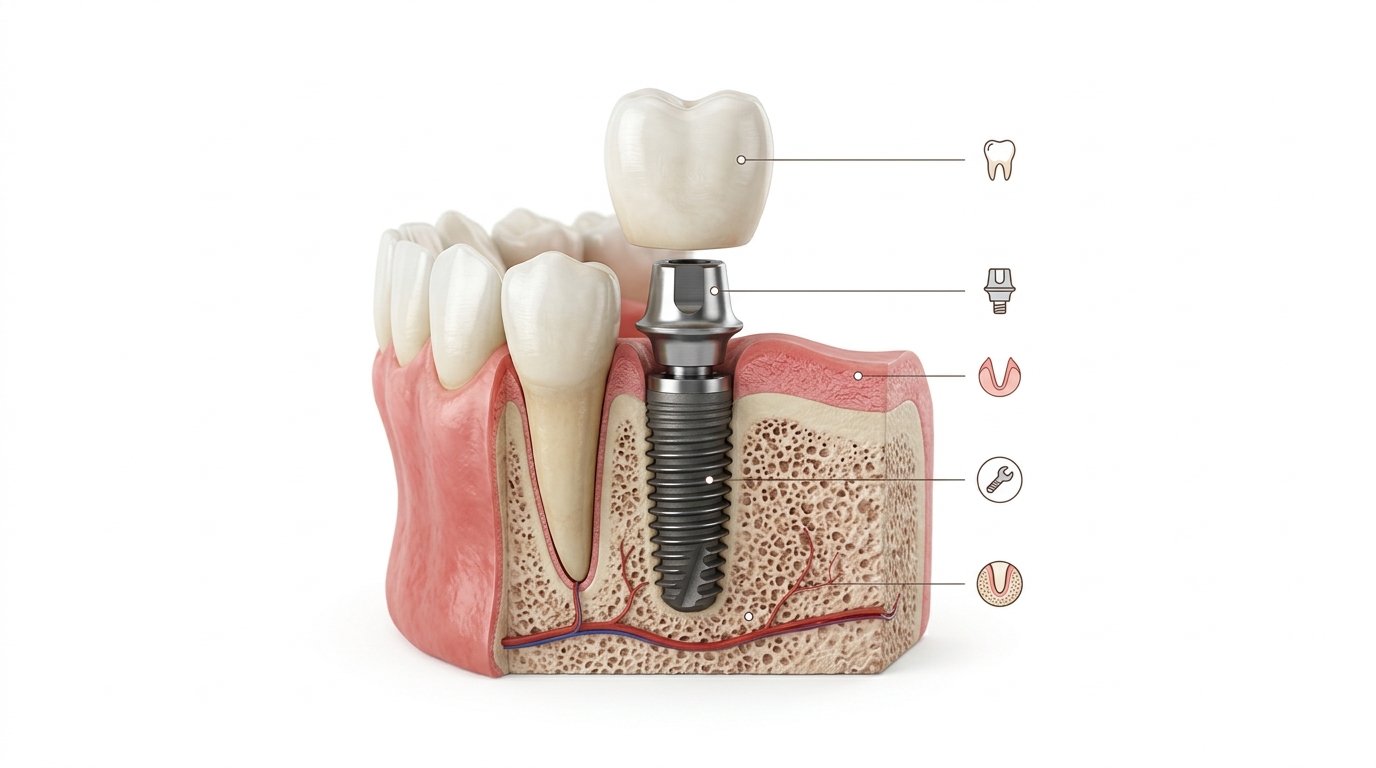
This is a common myth. Extraction removes the pain but leaves a gap that lets nearby teeth drift and the jawbone shrink, and replacing the tooth with a dental implant takes longer and costs more. A root canal keeps your natural tooth, which is usually the stronger long-term choice when the tooth can be saved.
Can a root canal treated tooth get infected again?
It can, although it is uncommon when all 3 stages are completed properly. Reinfection usually happens when a crack, a leaking filling or a missed canal lets bacteria back in. In many cases, the tooth can still be saved with root canal retreatment.
Where can I get root canal treatment in Gulshan-e-Iqbal, Karachi?
The Dental Clinic is in the Taj Clinics Building, Block 3, Gulshan-e-Iqbal, and treats patients from Gulistan-e-Johar, PECHS, Bahadurabad, Federal B. Area and across Karachi. You can book an appointment online or call 0316-0200011.
Get Expert Dental Care at The Dental Clinic
Root canal treatment succeeds when every stage is done carefully, from the first X-ray to the final crown. At The Dental Clinic in Gulshan-e-Iqbal, the same team plans and completes all 3 stages, so your tooth is not passed between different providers.
Dr. Saqib Minhas has practiced dentistry in Karachi since 2009 and leads the clinic’s restorative and implant work. Before any treatment begins, he shows you what the X-ray reveals, tells you honestly whether the tooth can be saved and explains which restoration suits it. Patients visiting from the UK, USA, Canada, UAE and Australia can plan their root canal and crown around a trip home.
If you have a toothache, gum swelling or a tooth your dentist has flagged for a root canal, start with a consultation. Visit our root canal treatment in Karachi page, contact the clinic or call 0316-0200011. The clinic is open from 12:00 PM to 10:00 PM.